 11
11Creating a home workspace that is both sustainable and productive is a goal many people are striving for, especially as remote and flexible working becomes increasingly common. A well-designed workspace not only supports your focus and efficiency but also minimises your environmental footprint. This guide shares practical tips to help you set up a home office that benefits both you and the planet.
When working from home, your environment plays a significant role in your performance and wellbeing. A workspace that is cluttered, poorly lit, or uncomfortable can lead to distractions and fatigue. Conversely, a sustainable workspace uses eco-friendly materials and habits that reduce waste and energy use, supporting a healthier lifestyle and planet.
Select a location in your home where you can work with minimal interruptions and noise. A spare room, a corner of the living room, or a section of a bedroom can be adapted to create a dedicated area.
Position your desk near a window to make the most of natural daylight. This can help improve mood, reduce eye strain, and lower your reliance on artificial lighting.
Choose desks and chairs made from sustainable materials such as reclaimed wood or recycled metal. Many brands now offer environmentally responsible options that combine durability with style.
Consider buying pre-owned furniture or giving old pieces a new lease of life with a fresh coat of paint or new upholstery. This approach reduces waste and can save money.
Keep your workspace simple by only including essential furniture and tools. A clutter-free environment enhances focus and reduces unnecessary consumption.
Choose an ergonomic chair and desk setup that supports good posture. This prevents discomfort and long-term health issues, making you more comfortable and productive.
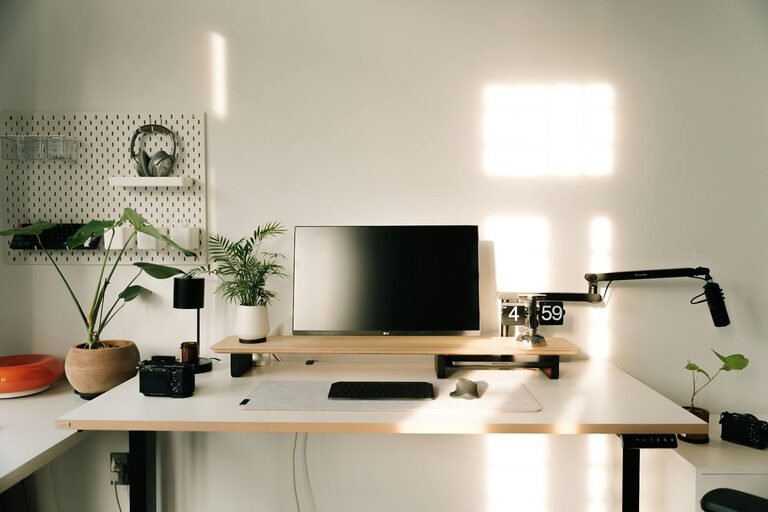
A desk that allows you to alternate between sitting and standing can improve circulation and reduce fatigue. Adjustable monitor stands also help keep screens at eye level.
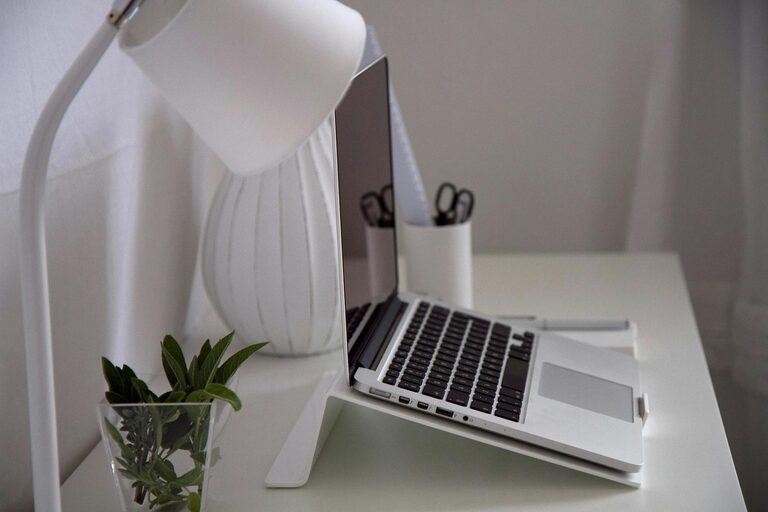
Switch to LED light bulbs, which use less energy and last longer than traditional bulbs. Task lighting, like a desk lamp with adjustable brightness, can reduce eye strain.
Position your lighting and screens to avoid glare or harsh shadows, making your workspace pleasant to work in throughout the day.
Keep only the items you need frequently on your desk. Store documents and supplies in organisers or drawers to maintain a tidy environment.
Choose organisers made from bamboo, recycled plastic, or other sustainable materials that help keep your desk neat and reduce plastic waste.
Reduce paper clutter by going digital where possible. Use cloud storage and digital notes to keep important information accessible yet tidy.
Plants can improve air quality and create a calming atmosphere. Choose low-maintenance varieties like succulents or spider plants that thrive indoors.
Decorate your workspace with items that inspire you but avoid overdoing it. Use artwork or handmade items that have meaning and don’t contribute to waste.
Avoid phantom energy drain by unplugging chargers and appliances when they aren’t needed.
Only print documents when necessary and use both sides of the paper. Recycle used paper and opt for sustainable paper products.
Having fixed hours and a dedicated workspace helps you separate work life from home life, improving focus and wellbeing.
Use methods like the Pomodoro technique (25 minutes focused work, 5 minutes break) to keep your energy levels stable throughout the day.
Keep a water bottle nearby and take short stretches or walks to maintain circulation and mental alertness.
Building a sustainable and productive home workspace is about combining smart design, eco-friendly choices, and healthy habits. By paying attention to these elements, you can create an environment that supports your work, reduces waste, and enhances your wellbeing. Start small and gradually incorporate these tips to find what works best for you and your home.